Navigating the 2026 US Midterms & the Black Friday Ramp-Up
When election season meets holiday shopping
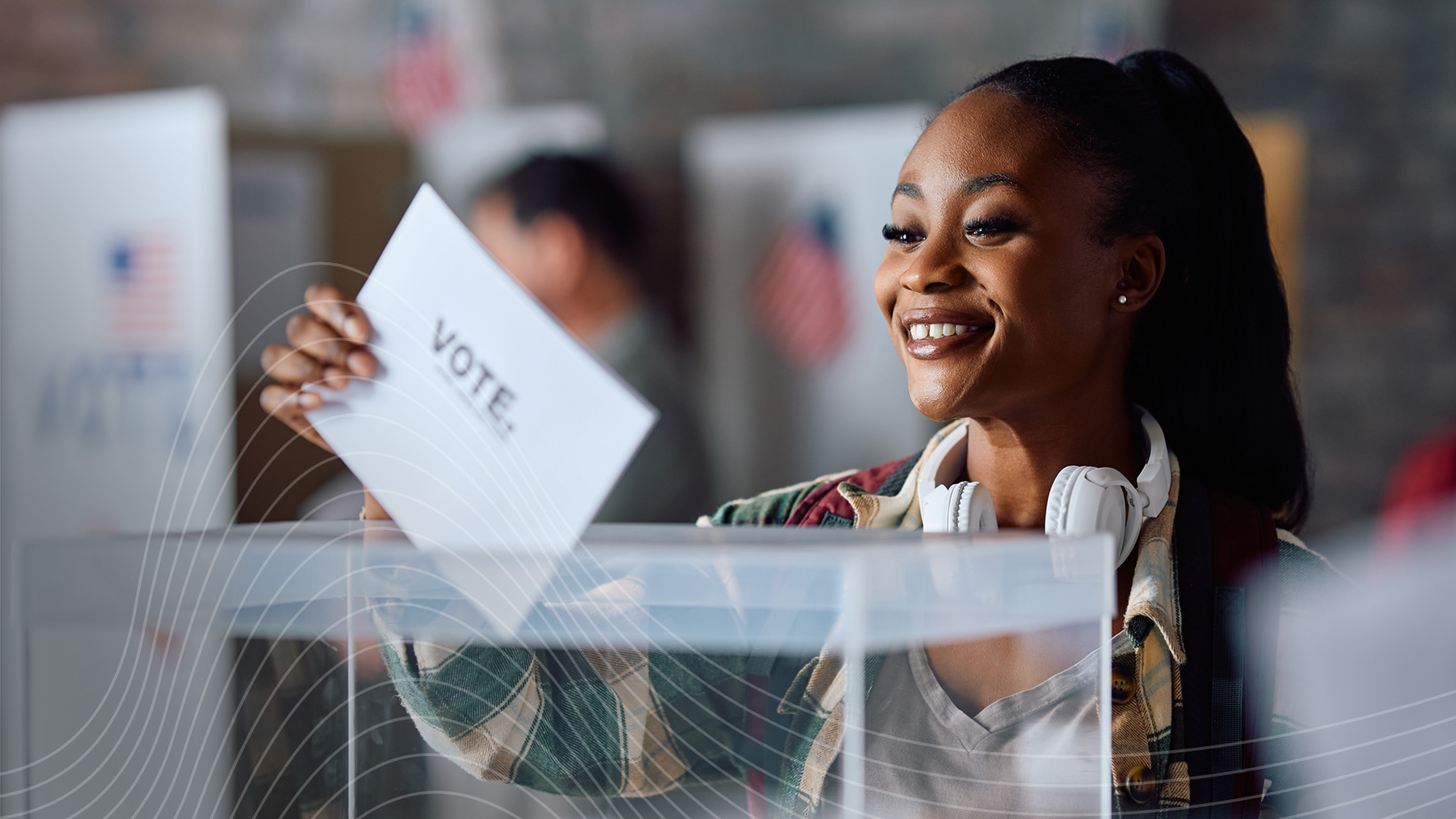
The 2026 US midterms land on November 3, right in the middle of the ramp-up to Black Friday and the holiday shopping season. For brands, that timing creates a real tension.
The same feeds where consumers look to creators for deals, promotions, and gift ideas will also be crowded with political commentary, campaign ads, and election updates. Brands need to respect the sensitivities of the moment without disappearing during one of the most important sales windows of the year.
The good news: this isn’t new territory. We can learn from how brands, consumers, and creators handled the last election cycle.
How brands handled 2024
During the 2024 presidential election, there was no single playbook. Brands landed at different points on a spectrum of caution, depending on how they weighed campaign continuity against election-related sensitivities.
The same feeds where consumers look to creators for deals, promotions, and gift ideas will also be crowded with political commentary, campaign ads, and election updates. Brands need to respect the sensitivities of the moment without disappearing during one of the most important sales windows of the year.
The good news: this isn’t new territory. We can learn from how brands, consumers, and creators handled the last election cycle.
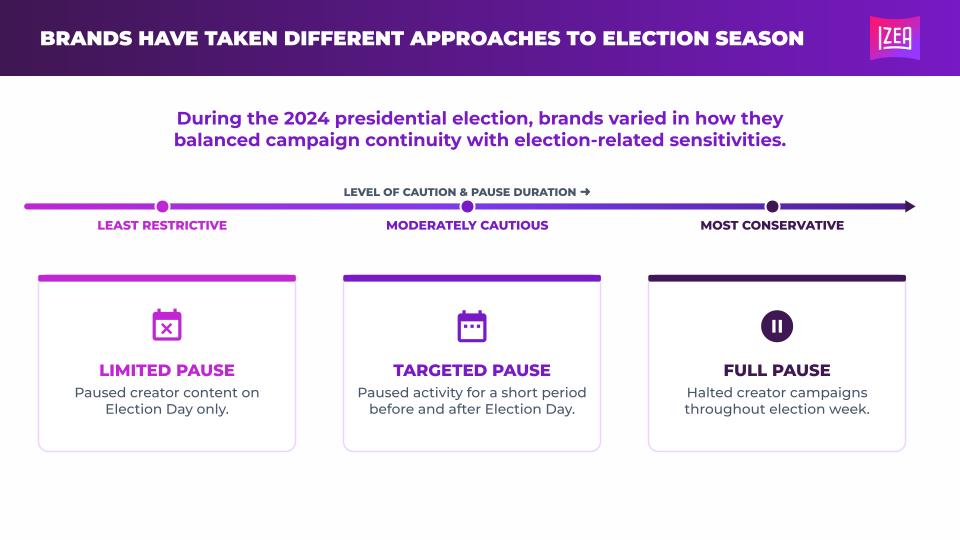
The least restrictive approach was a limited pause, where brands held creator content on Election Day only. A more cautious group took a targeted pause, stopping activity for a short window before and after Election Day. The most conservative brands chose a full pause, halting creator campaigns for the entire election week.
Each option carries trade-offs. A longer pause reduces risk but also gives up reach at a time when holiday shoppers are already starting to research purchases.
Consumers don’t expect brands to go quiet
It’s easy to assume audiences want brands to step back entirely during an election.
The data suggests otherwise.
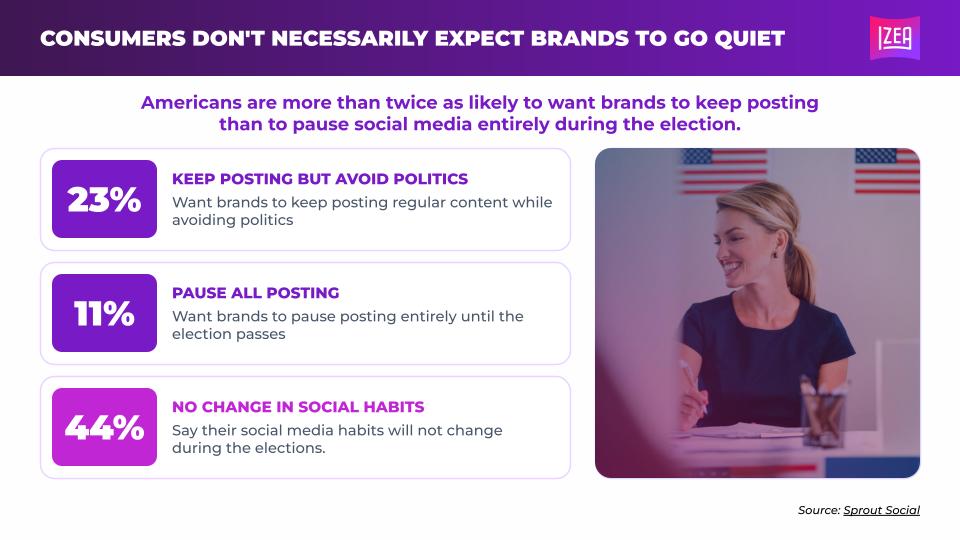
According to Sprout Social, 23% of Americans want brands to keep posting regular content while steering clear of politics. Only 11% want brands to pause posting entirely until the election passes. In other words, consumers are more than twice as likely to want brands to keep going than to go dark.
Even more telling, 44% say their social media habits won’t change during the elections at all. People will still be scrolling, discovering, and shopping. The question isn’t whether to show up, but how.
Creators are adjusting, too
Brands aren’t the only ones thinking carefully about this period. Creators engage with politics in many ways, from participating in political campaigns to mobilizing their communities around causes.
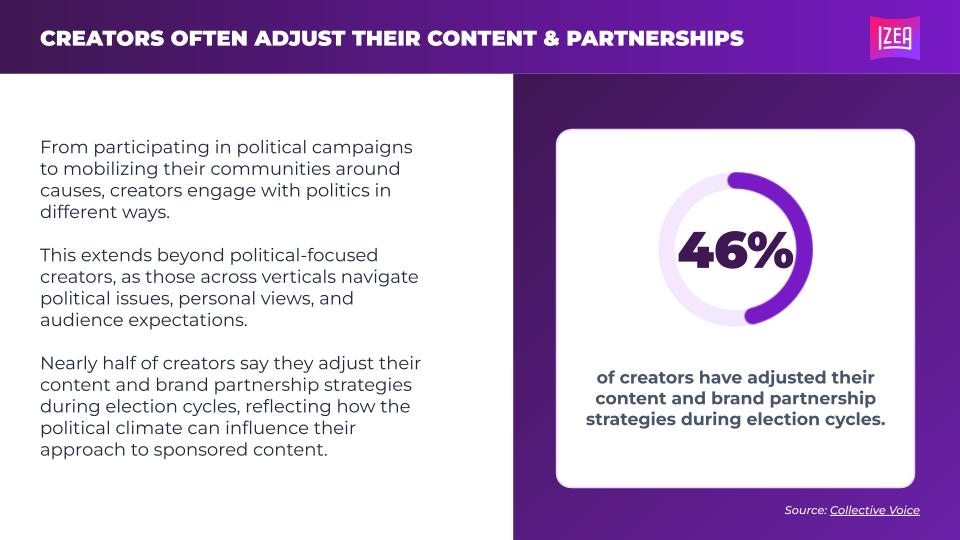
This goes well beyond political-focused creators. Creators across beauty, food, parenting, tech, and every other vertical are balancing political issues, personal views, and audience expectations. Per Collective Voice, 46% of creators have adjusted their content and brand partnership strategies during election cycles. That makes creator input an essential part of any election-season plan.
What creator content offers right now
Election season actually strengthens the case for creator marketing in two ways.
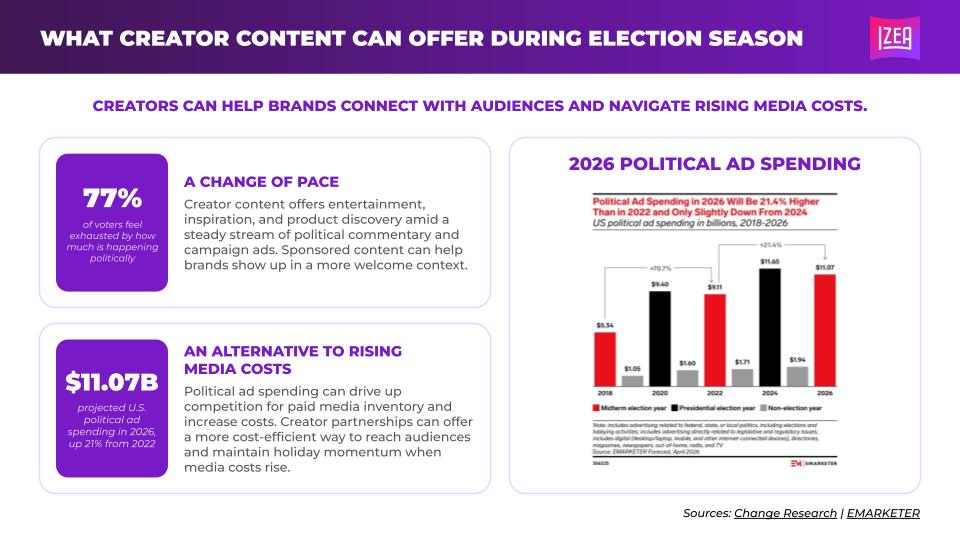
A change of pace. According to Change Research, 77% of voters feel exhausted by how much is happening politically. Creator content offers entertainment, inspiration, and product discovery amid a steady stream of commentary and campaign ads. Sponsored content from a trusted creator can help brands show up in a more welcome context.
An alternative to rising media costs. EMARKETER projects US political ad spending will reach $11.07 billion in 2026, up 21% from 2022 and only slightly below 2024’s presidential-year total. That spending competes for the same paid media inventory brands rely on before Black Friday, which can drive up costs. Creator partnerships offer a more cost-efficient way to reach audiences and keep holiday momentum going.
Three factors to guide your approach
The right plan sits where business priorities, audience expectations, and creator preferences overlap.
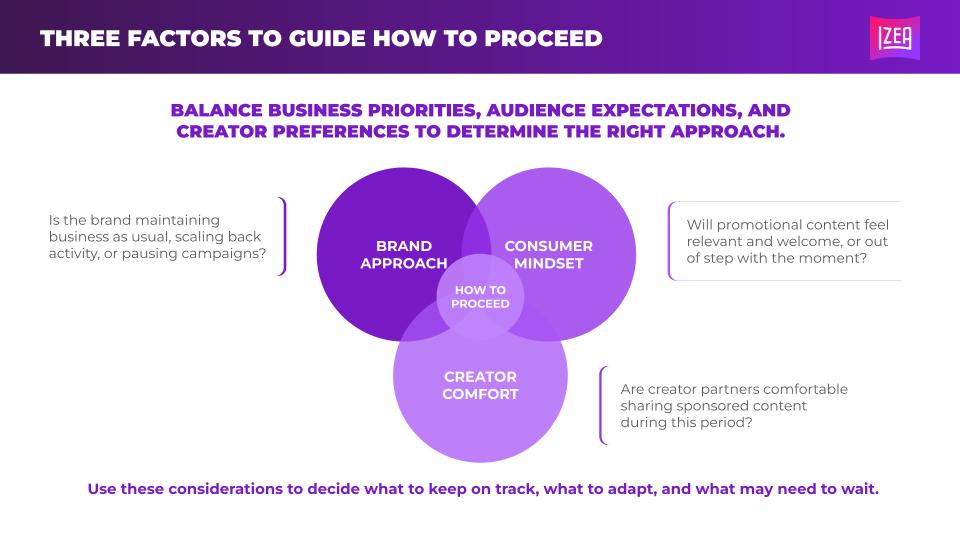
- Brand approach: Is the brand maintaining business as usual, scaling back activity, or pausing campaigns?
- Consumer mindset: Will promotional content feel relevant and welcome, or out of step with the moment?
- Creator comfort: Are your creator partners comfortable sharing sponsored content during this period?
Working through these questions helps you decide what to keep on track, what to adapt, and what may need to wait.
Putting it into practice
Once you’ve weighed those factors, three steps turn the strategy into action.
- Define the pause window. Evaluate campaign timing, brand priorities, and the election calendar to decide whether you need a pause at all, and if so, how long it should be. This sets the foundation for adjusting activity effectively.
- Align with creator partners. Talk with creators early to understand their plans, discuss comfort levels, and agree on content timing. Clear expectations prevent surprises during the election period.
- Monitor live content. Watch creator content as it goes live and flag potential brand-safety or contextual concerns. The news cycle can shift quickly, so be ready to make real-time adjustments.
The 2026 midterms don’t have to derail your holiday plans. With a thoughtful approach grounded in what consumers and creators actually want, brands can respect the moment and still stay visible through Black Friday and beyond.
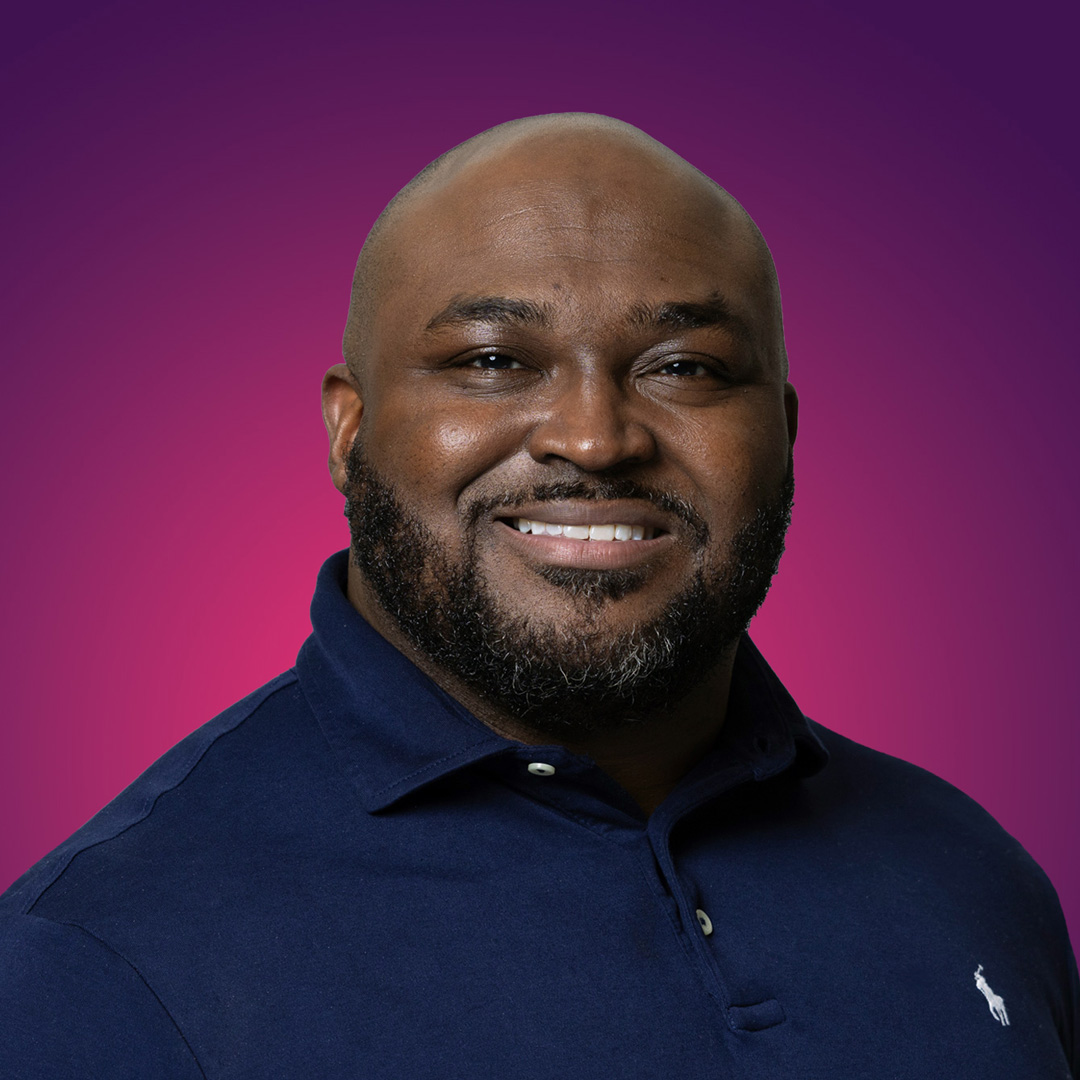
Lindsey Gamble is recognized as a LinkedIn Top Voice and a Business Insider “Expert to Know.” As Vice President of Creator Strategy and Innovation at IZEA, he translates the cultural power of the creator economy into measurable business growth for enterprise clients. In 2024, his industry leadership earned him an invitation to the White House for its first-ever Creator Economy Conference alongside 100 top digital creators and administration officials.