Think about the classic teenage dream. Keys in hand. The open road.
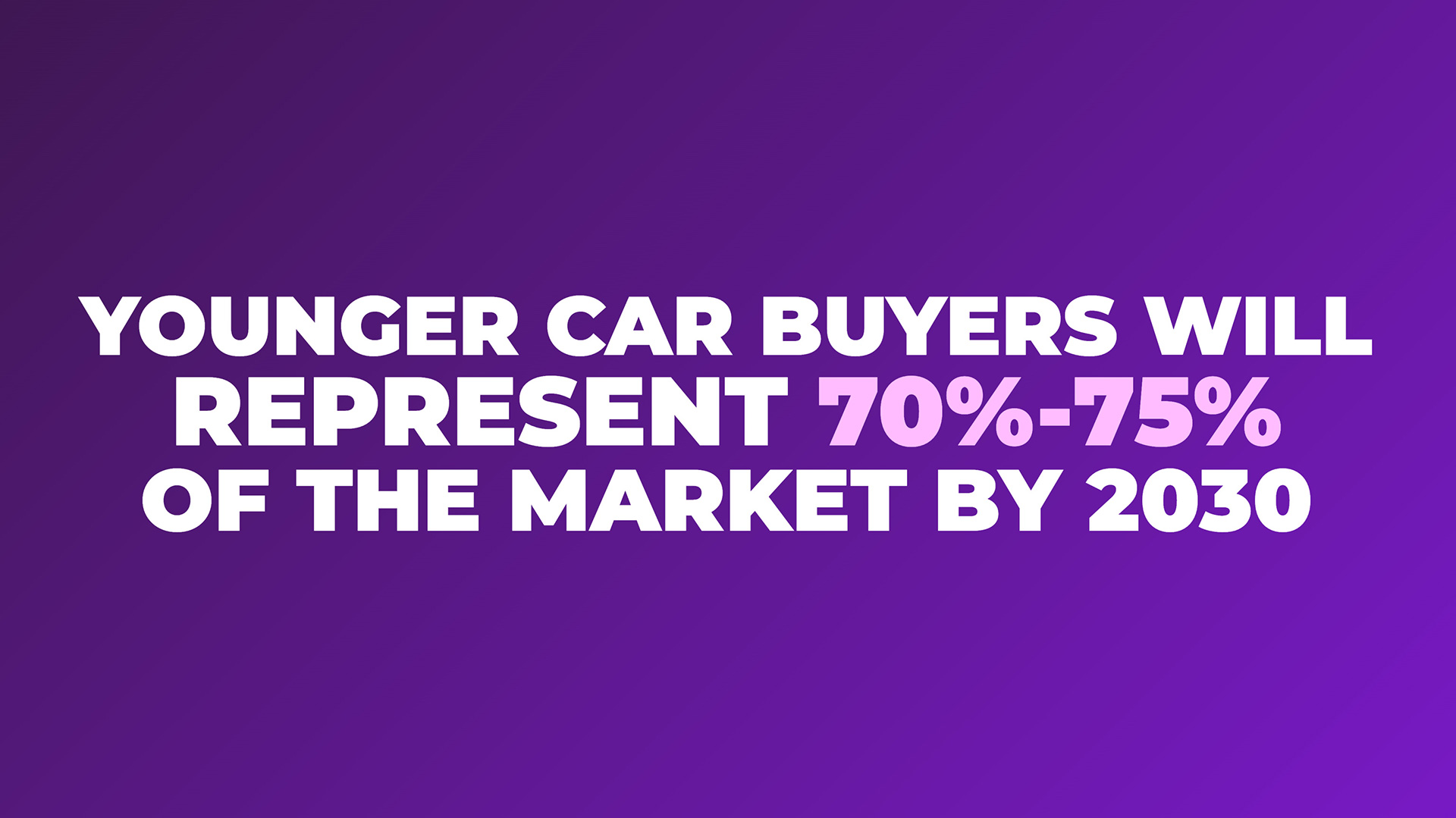
For decades, automotive marketing relied on that one universal truth: a driver’s license meant absolute freedom. That core desire hasn’t changed. But how today’s youth express that freedom has completely transformed. By 2030, younger buyers will make up 70% to 75% of the market. To win them over, brands must realize mobility isn’t just about getting from point A to point B anymore. It is an intensely emotional milestone.

To understand this shift, you only need to look at the ultimate high school rite of passage.
The Emotional Gravity of the Homecoming Milestone
Picture the driveway before a Homecoming dance. It is a high-stakes logistical and emotional event. How you arrive dictates your social currency.
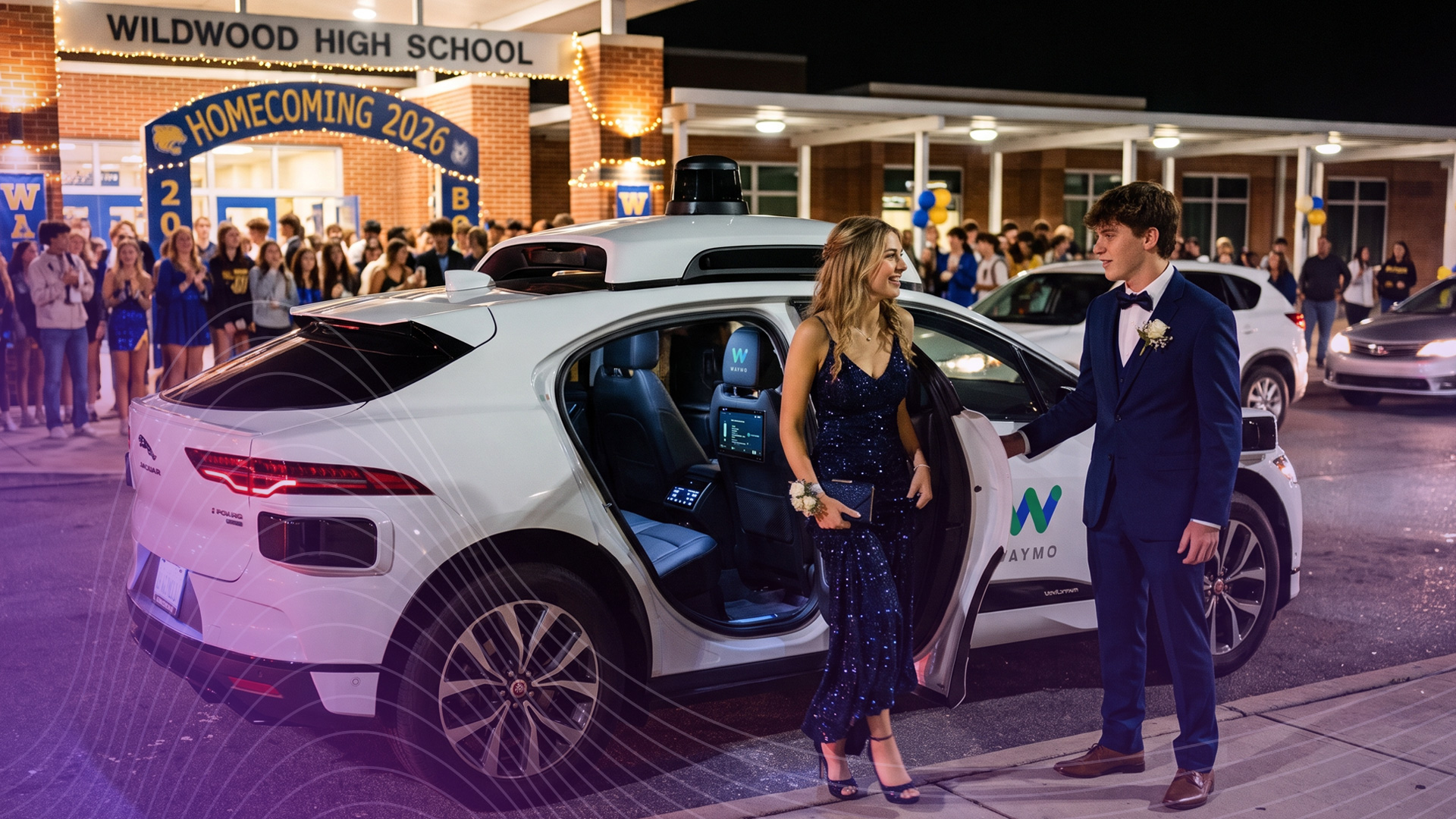
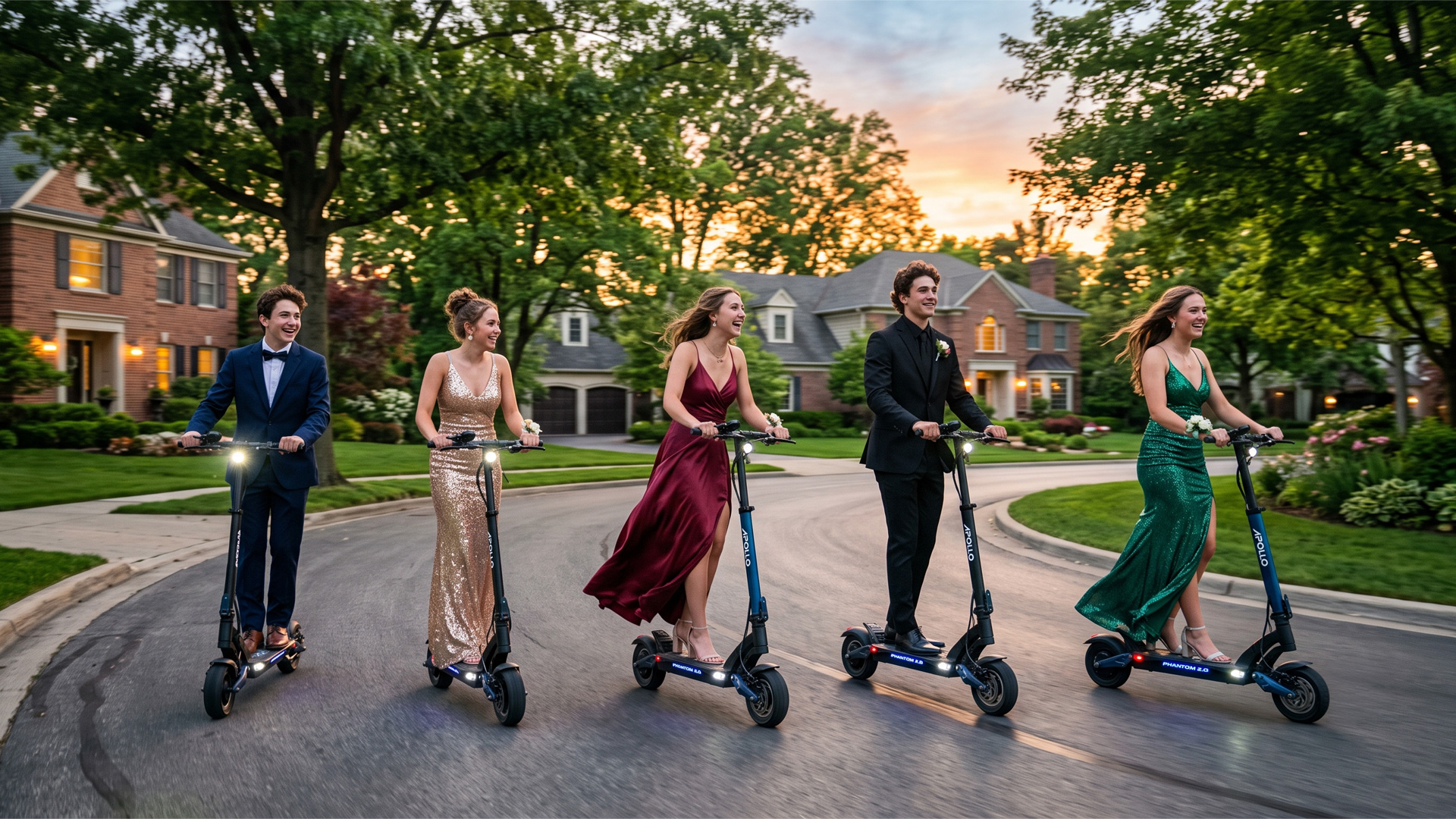
Historically, the ultimate status symbol was convincing your parents to let you borrow the family car. Today? The ultimate flex might be pulling up to the red carpet in the back of a fully autonomous Waymo. Or maybe arriving as a pack on sleek, high-performance eScooters.

But there is a secondary narrative happening right there in the driveway. Parents are watching their teenager dress up and leave. It triggers a stark realization that their child is growing up. And that impending 16th birthday means they need to figure out a vehicle situation. Fast.
This creates a massive psychological tug-of-war between the parent’s rational brain and the teenager’s emotional desires.
The First Car Dilemma: Safety vs. Status
When that post-Homecoming reality sets in, parents and teens enter the car-buying journey with completely different scorecards.
Parents are driven by anxiety and pragmatism. Their primary considerations are IIHS crash safety ratings, long-term reliability, and overall value. They want a vehicle that acts as a secure vault for their child.
The teenager, however, wants to feel cool. They are grading the vehicle on entirely different metrics: seamless smartphone integration, ambient cabin lighting, premium audio equipment, and how the car’s aesthetic translates to their social media feeds. They want a tech ecosystem on wheels.
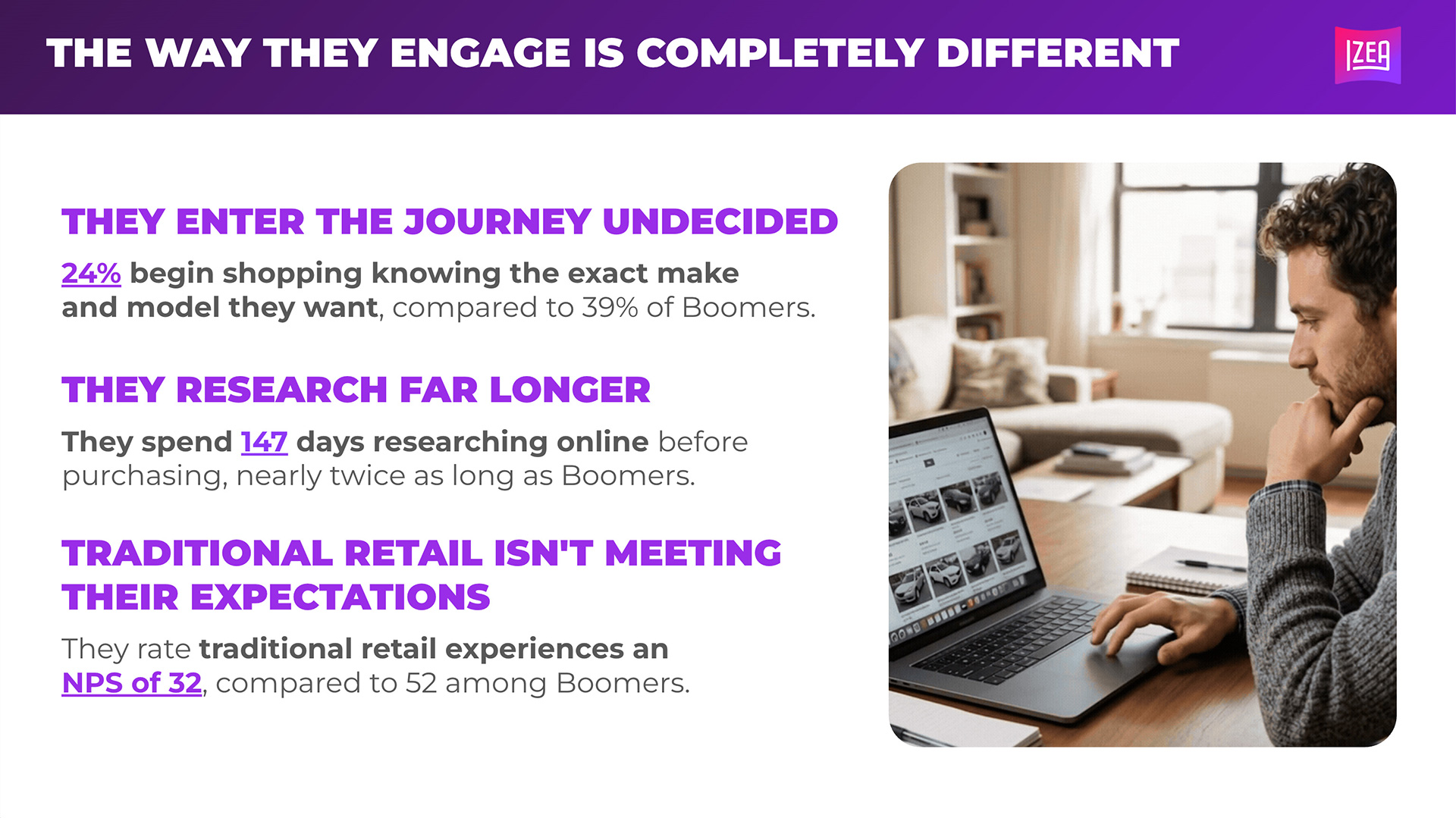
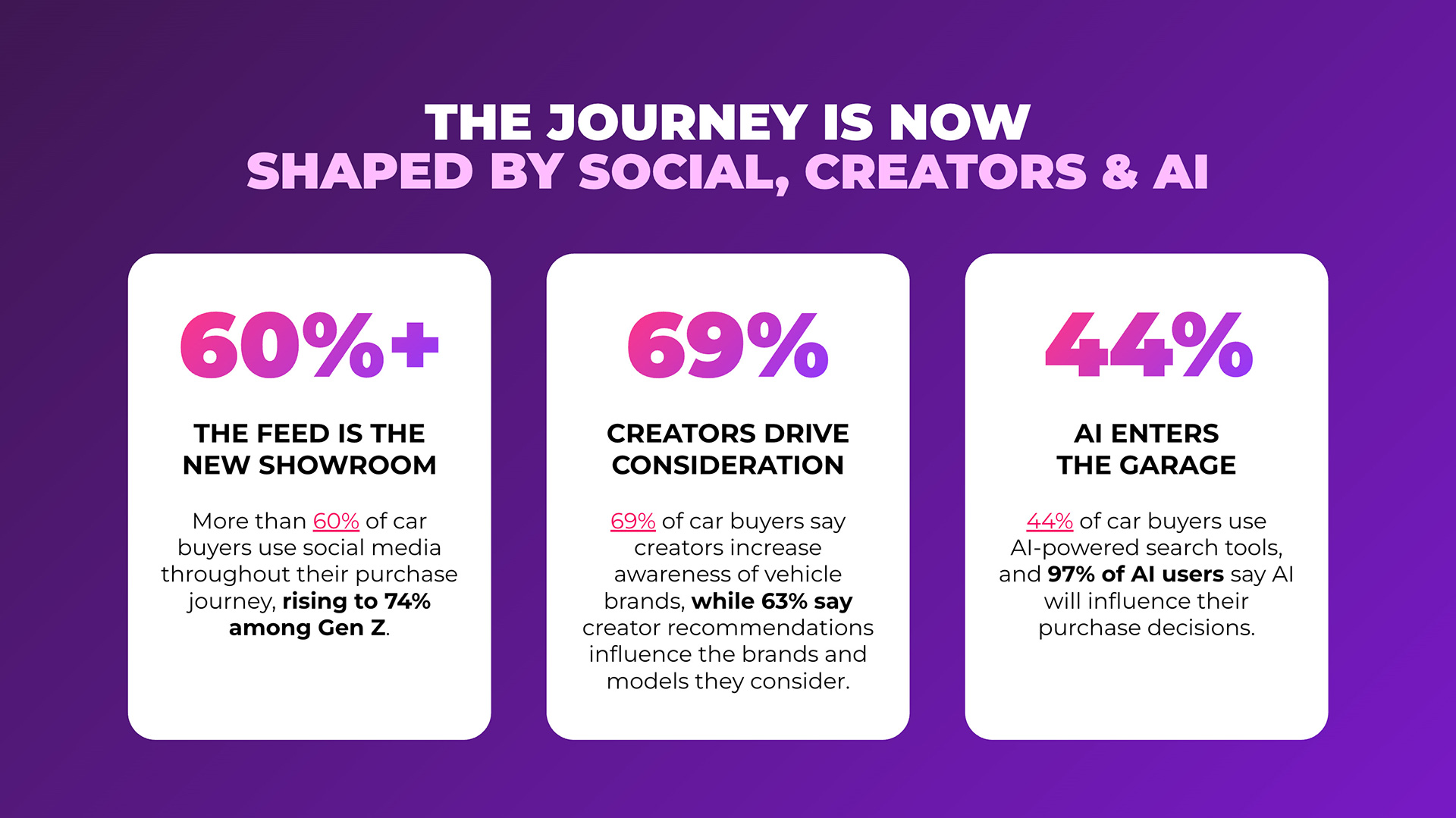
Furthermore, the way younger buyers engage in this process is completely different. They enter the journey undecided. Only 24% begin shopping knowing the exact make and model they want, compared to 39% of Boomers, according to Kelley Blue Book. Because they are starting from scratch, they research far longer. In fact, they spend 147 days researching online before purchasing, nearly twice as long as Boomers. This research phase is also highly technical: 44% of car buyers now use AI-powered search tools, and 97% of those users say AI will influence their purchase decisions.
It is difficult for a traditional 30-second commercial to perfectly balance a parent’s need for safety with a teen’s desire for status over a 147-day research window. Because these are two very different audiences, they are often better engaged through different creator communities.
The Rational Data Behind 2026 Youth Mobility
This emotional tension is compounded by the actual data driving youth mobility in 2026. Despite the popular narrative that young people are abandoning cars altogether, recent research paints a more nuanced picture. According to Enterprise Mobility’s late 2025 “On the Move” survey, Gen Z’s use of private vehicles is actually rising, with 66% reporting they use a private vehicle weekly or more.
However, Mercury Insurance’s July 2026 data reveals a critical caveat: 45% of Gen Z adults prefer being a passenger rather than the driver, primarily so they can relax and use their screens. Furthermore, 2025 research from Boston Consulting Group (BCG) highlights a generational split in powertrain preferences. While older demographics remain hesitant about EV range anxiety, younger consumers show stronger environmental values and are actively pushing the market toward hybrids and EVs, expecting frictionless digital purchasing along the way.
This desire for a frictionless experience is crucial because traditional retail isn’t meeting their expectations. Younger buyers rate traditional retail experiences an NPS of 32, compared to 52 among Boomers, according to CDK’s Global Study. Instead, the feed is the new showroom. More than 60% of car buyers use social media throughout their purchase journey, a number that rises to 74% among Gen Z.
Bridging the Generational Divide with Creators
“If an automotive brand is trying to reach Gen Z and their parents with a traditional broadcast commercial, they have already lost the room,” says Lauren Gregory, VP of Sales at IZEA. “Young consumers don’t want a corporate manifesto about safety features, and parents don’t care about ambient lighting. You have to use creators to bridge this gap. A lifestyle creator can review an EV by showing off the killer audio system and tech features to capture the teen’s desire, while seamlessly validating the driver-assist safety features to give the parent peace of mind. Creators speak both languages.”
The data supports this pivot, proving that creators drive consideration. Currently, 69% of car buyers say creators increase awareness of vehicle brands, while 63% say creator recommendations influence the brands and models they consider.
Whether a ride-share company is positioning itself as the safest option for a New Year’s Eve ride, or an OEM is trying to build brand affinity for a compact SUV perfect for college move-in day, creators are the engine. They are the only medium capable of balancing rational data with emotional reality.
Chart: Youth Mobility Milestones: 2016 vs. 2026
| Marketing Metric | The Youth Reality in 2016 | The Youth Reality in 2026 |
| The Ultimate Status Flex | Borrowing a parent’s luxury sedan | Arriving in a fully autonomous ride-share (e.g., Waymo) or the latest EV release. Look, no hands ma! |
| Teen Vehicle Priorities | Horsepower, exterior styling, manual transmission | Premium audio, screen integration, EV/Hybrid aesthetic |
| Parental Vehicle Priorities | Price, basic crash safety, gas mileage | Advanced driver-assist systems (ADAS), IIHS ratings, reliability |
| Driver vs. Passenger | High desire to be the driver (Independence) | 45% prefer being a passenger (Relaxation/Screen time) |
| Most Trusted Voice | Traditional automotive magazines and TV ads | Niche digital creators and peer social proof |
The Co-Creation Mandate
If automotive and mobility brands want to capture the next generation of drivers and riders, they must stop broadcasting at them and start co-creating with them. Above all, consumers want to participate.
By inviting consumers into the process, brands validate the parent’s fears while fueling the teenager’s aspirations, ultimately building a sense of trust that traditional advertising simply cannot manufacture. After all, 86% say brands are more trustworthy through co-creation, and 81% say it makes brands feel more authentic.
Influencer Marketing To-Do List
- Audit your youth marketing briefs to ensure you are balancing both the parent’s need for safety and reliability with the teen’s desire for tech, audio, and aesthetic status.
- Shift media budget away from traditional broadcast spots and fund creator-led campaigns that earn trust and validate, recognizing that the social feed is the new showroom.
- Prioritize category entry points that show vehicles naturally integrated into highly emotional life milestones, like a 16th birthday or college move-in day.
- Reach out to our automotive experts at IZEA.


John Francis is the Vice President of Sales & Marketing Operations at IZEA Worldwide (NASDAQ: IZEA), a full-service creator economy agency. Powered by its proprietary ZED technology, IZEA provides comprehensive influencer marketing solutions for brands. Since 2006, the agency has facilitated nearly 4 million brand-creator collaborations and partnered with over 1,500 brands. John leads the go-to-market strategy for IZEA’s enterprise services, working directly with marketing leaders at Fortune 500 companies across the CPG, media and entertainment, mobility, and consumer electronics sectors.