Key Findings – The Creator-Led Framework for Summer Movie Marketing:
- The Financial Window: The May through August summer window generates approximately 40% of the entire year’s domestic box office revenue. This creates a highly saturated advertising environment where traditional P&A budgets face diminishing returns.
- The Cultural Shift: According to a Deloitte study, 33% of consumers and 59% of Gen Z make viewing decisions based on creator content. Audiences no longer discover content solely through plot-summarizing trailers; they are driven by creator-led lore and social discourse.
- The Distribution Multiplier: Reallocating paid media to Creator-Handle Media (running ads through a creator’s profile) yields massive efficiency gains. eMarketer data shows creator-led ads deliver a 70% higher click-through rate and 159% higher engagement compared to traditional brand ads.
- The Measurement Reality: Opening weekend box office is a lagging indicator of cultural relevance. Sustained community engagement and share of voice must be tracked across a multi-week window to capture the long-tail impact of modern franchise marketing.
The Stakes: Why Summer Dictates the Year
Memorial Day might mark the official start of summer, but in the Media and Entertainment (M&E) space, the true kickoff happens when a marketing campaign stops selling a movie and starts engineering a cultural event.
Summer is not just a season; it is the financial backbone of the entertainment industry. Historically, the May through August window generates nearly 40% of the entire year’s domestic box office revenue.
Simultaneously, streaming consumption experiences a massive seasonal surge. With over 50 million students out of school, families embarking on cross-country road trips, and audiences seeking air-conditioned escapes from the July heat, daily screen time skyrockets.
Because the financial stakes are so high, the advertising environment becomes incredibly saturated. When every major studio and streaming platform is deploying massive, nine-figure P&A budgets at the exact same time, traditional media buys simply cancel each other out. You cannot buy your way to the top of the cultural conversation with volume alone. You have to manufacture a fandom ecosystem.
This is exactly why doubling down on a creator strategy is no longer optional. It is the only way to cut through the deafening noise and deliver the easter eggs and cultural moments audiences actually crave.. Additionally, audiences don’t primarily discover content through trailers that merely summarize the plot anymore, they discover it through people obsessing over the lore. A Deloitte study found, approximately 33% of consumers, and 59% of Gen Z, watch shows or movies because of creators. Many also go to theaters after repeated exposure to social conversation.
For decades, the M&E summer strategy has relied on a single, high-stakes metric: the opening weekend box office. Studio P&A budgets are heavily front-loaded, designed to manufacture a massive spike in passive awareness that peaks on a Friday night and drops off a cliff by Monday.
But as we approach the May kickoff for the 2026 summer season, M&E brand directors are facing a harsh reality. The traditional hype cycle is yielding diminishing returns. Between franchise fatigue and the comfort of at-home streaming, a 30-second television spot is no longer enough to get audiences off the couch because simply talking about the output isn’t enough anymore. Today’s audiences want something to cling to like lore, behind-the-scenes fascination, easter eggs, and internet-breaking cultural moments. Movies can no longer just be films; they must operate as inescapable, living brands.
To win this summer, studio marketers must realize a fundamental shift. The best way to sustain cultural relevance is to treat creators as co-authors of your franchise lore and the primary architects of your movie’s cultural wrapper. Partnering with a specialized influencer marketing agency is no longer just a tactical add-on; it is the critical engine for modern franchise marketing.
Stop Buying Reach. Start Funding Lore.
The traditional playbook says you hire Mega and Celebrity creators to post a trailer on their feed. But today’s audiences see right through a transactional post that only talks about the output.
Instead of borrowing their reach, integrate them into the world building and let them fuel the obsession. Look at Marvel’s Avengers: Doomsday hitting theaters this May. The cultural conversation for a movie of this scale does not start on opening night; it starts months prior.
M&E brands should partner with Macro-creators (the pop-culture analysts and deep-lore fan channels) not just to review the trailer, but to actively build the conspiracy boards and dissect the scandals or hidden references.
Give these creators exclusive breadcrumbs, hidden easter eggs, or fragmented pieces of content that their communities have to stitch together. When a creator is actively theorizing and building lore alongside their audience, they are not just advertising a movie. They are creating a parasocial investment in the hype itself, which guarantees a ticket sale.
Fund Scroll-Stopping, Real-World Spectacles
The most successful campaigns blur the line between the digital feed and the physical world. To truly capture attention, you must empower creators to build wild, scroll-stopping cultural moments that give audiences something to cling to.
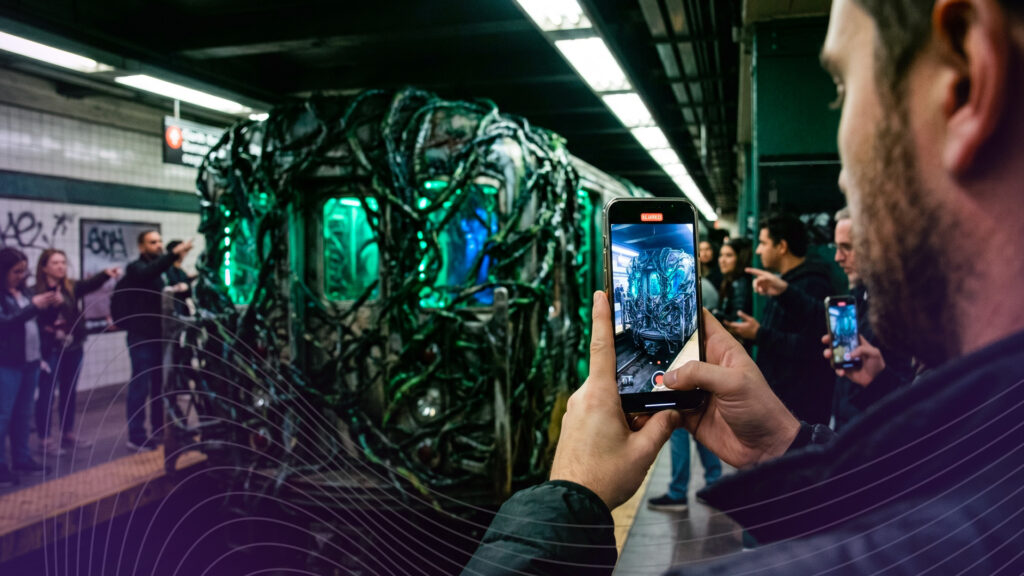
Imagine moving beyond a simple sponsored video for Avengers: Doomsday and instead orchestrating a highly produced “villain takeover” of a New York City subway line. By embedding mega-creators at the center of a massive, real-world stunt, you turn unsuspecting commuters into extras and create an undeniable spectacle that feeds the internet’s desire for outrage, surprise, or awe. These physical activations, designed specifically to be captured, remixed, and shared by creators, generate a ripple effect of highly creative organic content that becomes a parallel form of entertainment traditional out-of-home advertising simply cannot match.
Make the Theater the Flex, Not Just the Movie
Streaming has trained consumers to wait. To win the summer, you must use creators to turn the physical act of going to the theater into a viral, FOMO-inducing event where participating in the trend is just as important as watching the film.
Consider the family and Gen Z audiences heading to Toy Story 5 in June or Shrek 5 in July. Leverage your creator partnerships to do more than just review the film and instead document the ritual of attending it. Brands must manufacture that behavior purposefully.
Activate Nano-creators to show off their highly specific, thematic outfits for the Shrek 5 premiere. Have parenting creators vlog the ultimate Toy Story 5 summer road-trip pit stop at the local cinema.
When you flood the feed with the aesthetic and the social ritual of the theater experience, you create an undeniable cultural gravity. The movie becomes secondary to the social event and the meta-narrative of attending it.
The Distribution Flip: The 20% Rule
The final, and perhaps most critical, shift for M&E directors is how media dollars are deployed. If you are exclusively running polished studio trailers focused solely on the plot from your official brand handles, you are actively fighting the algorithm and boring your audience.
According to the IAB 2025 Creator Economy Ad Spend and Strategy Report, 86% of consumers now make purchase and viewing decisions based on creator recommendations. The data tells us exactly how to act on this.
Instead of fighting the feed, flip your distribution model. Transition to Creator-Handle Media (amplifying creator content through their own profiles). eMarketer reporting proves that creator-led ads deliver a 70% higher click-through rate and 159% higher engagement compared to traditional brand ads.
The ad inherently carries built-in trust and platform-native signals that algorithms prioritize. If you allocate at least 20% of your paid social media budget to amplify these creator-led narratives, you transform a standard marketing campaign into a highly efficient conversion engine fueled by authentic fandom.
3 Questions to Challenge Your Summer Strategy
Before finalizing your 2026 summer marketing mix, brand directors must rigorously audit their current approach. Here are three questions to expose the vulnerabilities in a traditional playbook, along with the strategic solutions from IZEA.
Are we treating creators like distribution channels, or like co-authors of the hype?
Studio marketing teams are trained to tightly control the narrative. They may treat creators like actors, handing them heavily sanitized, studio-approved talking points.
In the Creator Economy, strict control kills authenticity. If a creator sounds like a press release, their community will scroll past the content immediately. As a leading influencer marketing agency, we counsel M&E brands to provide guardrails rather than scripts. We help you give creators access to exclusive lore and trust them to translate your intellectual property into their native voice. Co-authorship is what turns a paid promotion into genuine fandom and obsession.
In terms of finding the right creators, every studio has their do’s and don’ts. IZEA’s platform ZED can search hundreds of thousands of posts to ensure creator partnerships are brand-safe.
Are we still defining success solely by Friday night ticket sales?
Traditional studio marketing treats opening weekend as the finish line. As a result, creator campaigns are often abruptly paused the moment a movie premieres or a series drops.
Opening weekend revenue is a lagging indicator of sustained cultural relevance in an era where the post-movie discourse is part of the product. If you go dark on Saturday morning, you abandon your most vocal advocates right when the casual viewing audience is logging online to decide what to watch. IZEA helps brands build an always-on measurement framework. We track community engagement, share of voice, and ticket or subscription lift across a sustained multi-week window to ensure your momentum does not collapse after premiere night.
Are we expecting organic reach to do the heavy lifting?
Many M&E brands invest heavily in top-tier creator talent but refuse to put paid media dollars behind the resulting content, relying entirely on the creator’s organic algorithm.
Relying solely on organic reach is a failing strategy. To maximize your upfront investment in talent, you must shift to Creator-Handle Media. By integrating your creator management with your media buying team, a specialized influencer marketing agency identifies the highest-performing organic posts and aggressively amplifies them through the creator’s own profile. This tactic bypasses algorithmic suppression, scales your highest-converting content, and drives measurable return on investment by keeping the cultural conversation front and center.
The Bottom Line
Fandom cannot be bought on a Friday night. It must be engineered over a season. As the summer blockbuster window opens, the studios that win will be the ones that stop trying to interrupt the cultural conversation and start paying creators to host it through lore, spectacle, and manufactured hype.
To drive ticket sales and streaming subscriptions, studios must partner with a specialized influencer marketing agency to activate creator-handle media, leverage macro-creators for franchise lore, and move beyond the opening weekend spike to turn their movies into inescapable cultural brands.
Frequently Asked Questions: Creator Marketing for Summer Movies
Q: What percentage of box office revenue comes from the summer window?
A: Historically, the May through August window generates approximately 40% of the entire year’s domestic box office revenue, making it the most financially critical period for studio marketers.
Q: How much do creators influence moviegoing decisions?
A: According to a Deloitte study, approximately 33% of all consumers — and 59% of Gen Z — watch shows or movies because of creator recommendations.
Q: What is Creator-Handle Media in movie marketing?
A: Creator-Handle Media refers to amplifying creator-produced content through the creator’s own social profiles rather than from a brand’s official handles. This approach delivers higher algorithmic trust and platform-native signals.
Q: What CTR improvement do creator-led ads deliver vs. traditional brand ads?
A: According to eMarketer data, creator-led ads deliver approximately 70% higher click-through rates and 159% higher engagement compared to traditional brand advertisements.
Q: What is the “20% Rule” for movie marketing media budgets?
A: IZEA recommends allocating at least 20% of paid social media budgets to amplifying creator-led content through creator handles, rather than running all spend from official studio accounts.
Q: What types of creators are most effective for franchise movie marketing?
A: Macro-creators (pop-culture analysts and deep-lore fan channels) are most effective for building pre-release buzz, while Nano-creators drive authentic, community-level behavior like themed outfits and moviegoing rituals.


John Francis is the Vice President of Sales & Marketing Operations at IZEA Worldwide (NASDAQ: IZEA), a full-service creator economy agency. Powered by its proprietary ZED technology, IZEA provides comprehensive influencer marketing solutions for brands. Since 2006, the agency has facilitated nearly 4 million brand-creator collaborations and partnered with over 1,500 brands. John leads the go-to-market strategy for IZEA’s enterprise services, working directly with marketing leaders at Fortune 500 companies across the CPG, media and entertainment, mobility, and consumer electronics sectors.