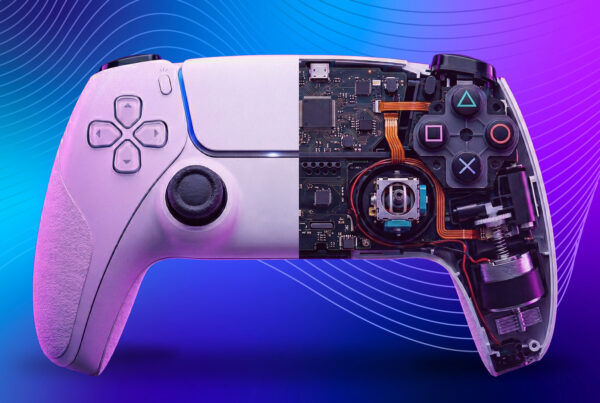
The spec war is over, and everyone won. Your product is incredible and so is everyone else’s. In a market of total hardware parity, the only thing left to differentiate is the soul of the brand. If you’re still trying to buy a click with technical jargon, you’ve already lost the community. It’s time to stop marketing at people and start world-building with them.
So, how do you spend your budget to differentiate in a market where innovation is incremental and parity is the new normal? The blunt answer is: you can’t. You can no longer buy brand differentiation with specs-heavy advertising.
”As Ross Yellowlees, VP of Sales at IZEA, put it: “In an era where hardware is increasingly commoditized, the only true differentiator is the community and the culture built around the product. You don't just need a better screen; you need a better story.”
This is the core paradox facing marketing leaders: they must build aspiration for mature products that feel undifferentiated, while cutting through a deafening “noise” of technical jargon to explain emerging innovations. The challenge has decisively shifted from getting a click to building a community.
Consumers are skeptical of overly polished, traditional “unboxing” videos. They demand the “person like me” reassurance that only creator-led content provides. This isn’t a minor shift; it’s the new reality. U.S. creator ad spend is projected to reach a massive $44B in 2026, growing four times faster than the broader media industry. We’ve entered the “Social Singularity,” where short-video platforms like TikTok and Instagram Reels are rapidly becoming the primary search engines for the consumer tech decision journey. This migration means your brand’s presence in the creator economy is no longer a tactical experiment.
It is a strategic necessity for survival.
Despite this clear imperative, enterprise marketing leaders are grappling with three critical challenges:
- How do you win across a decision journey that is increasingly fragmented and non-linear (the Path to Purchase)?
- How do you prove that creator spend delivers measurable business outcomes, not just vanity metrics (the ROI Imperative)?
- And, how do you balance the hunger for behavioral data with a consumer base that is increasingly skeptical of non-authentic brand interference (Authenticity vs. Data)?
The solution isn’t just more influencers. It’s a future-proof strategy that positions creators as essential R&D partners rather than mere promoters. This means moving beyond the one-off launch review and inviting your top creators behind the NDA to beta-test a product six months pre-launch, helping to refine the software UI or co-design limited-edition peripherals. Once that co-developed product is ready for market, creators shouldn’t just be reviewing it in a vacuum; they should be embedding it into cultural moments. Instead of funding another standard unboxing video, you transform the tech from a static piece of hardware into an active participant in a shared, global community. Consider how brands like Lenovo activate around global tentpoles like FIFA.
Telling an enterprise brand to move at the speed of culture sounds great on a slide, but in reality, tech brands are bogged down by legal reviews, FTC compliance, and strict global brand guidelines. AI is no longer a trend; it’s a go-to-market requirement to solve this exact bottleneck. Three in four brands are already planning to use AI for creator marketing tasks, as it is essential for things like brand safety at scale, personalization & localization, and most critically, audience mapping. This includes identifying the exact right creators for niche products, which enterprise brands cite as their #1 challenge today.
To solve the ROI imperative, the biggest unlock for 2026 is unified data. You must integrate creator campaigns directly into your existing enterprise Customer Data Platforms (CDPs). By connecting these data silos, you can finally track a user from a TikTok view, to a website visit, to a cart checkout. By integrating creator-led media as a performance channel rather than a tactical PR add-on, Tech brands can finally achieve the ROI justification they crave. Creators are no longer just “top of funnel”; they drive the entire path to purchase.
Stop Buying Reach and Start Buying Resonance
Here is how to operationalize the Creator Economy in your next launch:
| Focus Area | Annual Strategic Planning | Day-to-Day Execution |
| Budgeting & Media | Shift 20% of Performance Budget: Stop relying solely on sterile studio product renders. Earmark a portion of programmatic and paid social budgets specifically for whitelisting top-performing creator content. | Test Head-to-Head: Run creator-led assets against traditional brand assets in A/B tests daily to optimize ad spend and scale what resonates. |
| Product & R&D | Bring Creators Behind the NDA: Move your top 5% of historical, high-performing creators into a formal advisory board to beta-test software and guide accessory designs months before the Go-To-Market strategy is locked. | Feedback Loops: Use creator comment sections as real-time focus groups, reporting sentiment and feature requests directly back to product managers. |
| Event Activations | Map the Tentpoles: Plan your year around cultural moments (like CES, gaming tournaments, or Roblox integrations) rather than just standard product release dates. | Maximize Earned Media: When hosting live creator events, focus on facilitating organic moments that turn a handful of paid deliverables into hundreds of pieces of earned content. |
| Data & Technology | Connect the Data Silos: Mandate that your agency and internal data teams integrate creator engagement metrics directly into your CRM/CDP. | Deploy AI for Efficiency: Utilize AI tools to map niche audiences and ensure brand safety at scale, overcoming the bottleneck of legal reviews and FTC compliance. |
Let’s be blunt: In the Social Singularity, your brand relevance matters most. You can’t buy loyalty with a 4K render, and you can’t force resonance with a legal-approved script. The specs gap has closed, and the only thing left to differentiate is the soul of your brand. Turn your creators into partners, turn your data into insight, and turn your product into a participant. The spec war is over. The culture war has begun. Which side are you on?
Navigating the creator economy doesn’t have to be a solo effort. As a full-service agency, IZEA partners with brands to build tailored, impactful solutions. We’d love to hear about your goals—let’s chat.

John Francis is the VP, Sales & Marketing Operations at IZEA, where he champions the alignment of sales and marketing to accelerate innovation and fuel strategic growth within the Creator Economy.