How do you systemize authenticity?
To compete with the agility of challenger brands and the scale of private labels in the Creator Economy, legacy Household Goods leaders must leverage a tiered creator strategy that captures real-life moments when there is a job to be done.
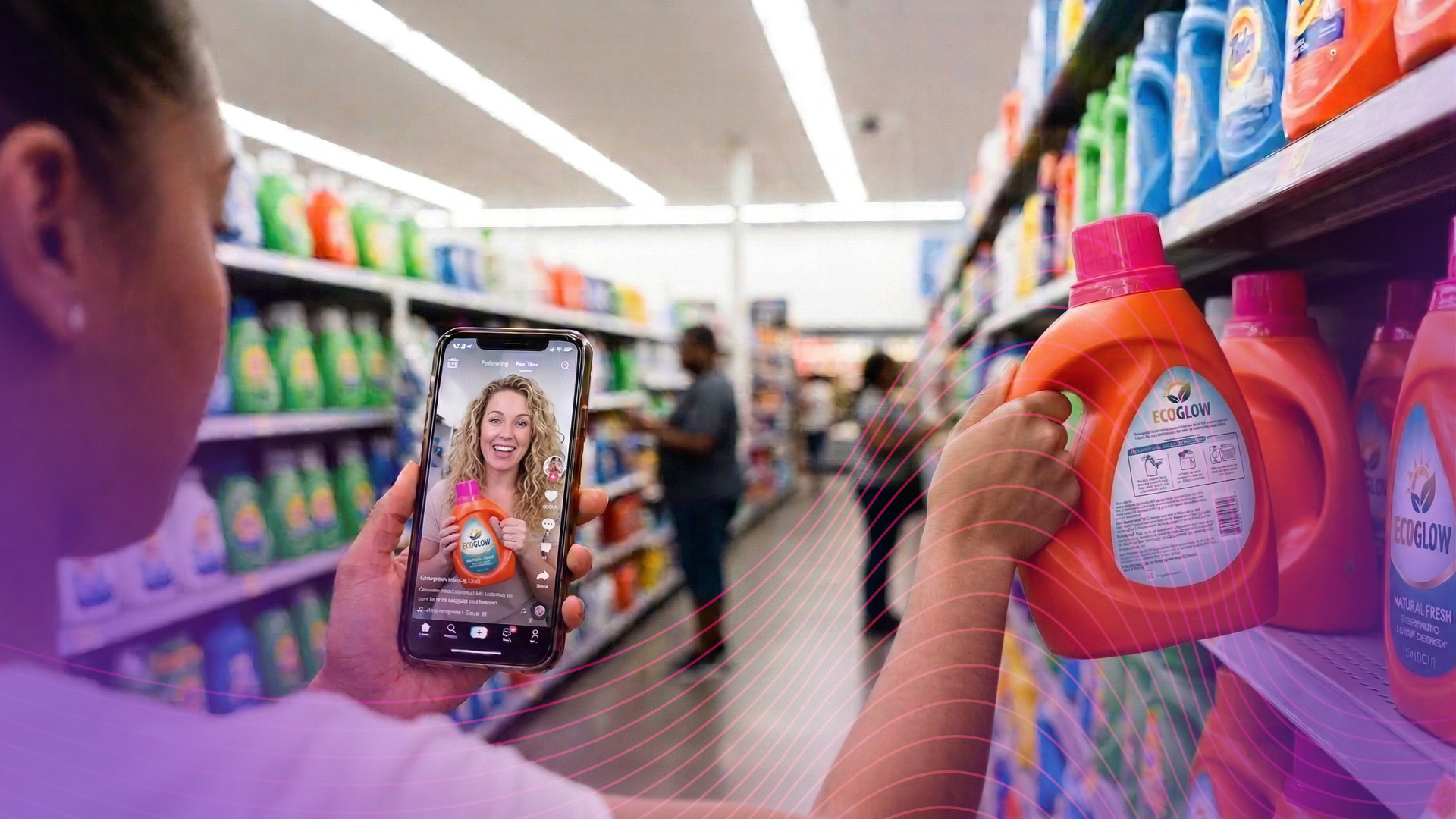
Look at the leaders: Unilever is currently deploying 2,000 micro and nano-influencers to create cleaning content for TikTok and IG. They understand that at scale, these creators aren’t just endorsers; they are real-life storytellers.
However, telling stories is only half the battle. The breakdown for most legacy brands happens in distribution. At IZEA, a leading influencer marketing agency, we help brands move from one-off campaigns to always-on community engines by treating creator content not just as creative, but as paid performance inventory.
Here is the blueprint to systemize authenticity, cross the 20% investment threshold, and drive measurable retail lift in 2026.
- Treat Creators as Channels to Audiences
Most brands claim to be audience first, but still select creators like talent, not media inventory.
Media planning starts with audiences. Influencer marketing rarely does, and that is a mistake. Creators are more than just talent. They are direct channels to your target audiences. When planned with an audience-first mindset, your creator selection becomes your media plan. In this model, the creator’s audience equals your community access point, their impressions equal your reach, and their content velocity dictates your frequency. By treating creators as distinct media channels, you can strategically weight your platform mix and target specific geographic locations with surgical precision.
- Scale Creator Handle Media where it Drives Performance
The data has clearly established that creator-led content outperforms professionally made brand content. It shouldn’t be surprising that creator-handle media completely outperforms brand-handle media. When A/B testing between the two, creator-handle media scales faster and with far more efficiency.
“Legacy brands must stop thinking of influencers as a seasonal PR play and start treating them as an always-on performance channel,” explains Danielle DuPreé, VP, Sales – CPG Household Goods at IZEA. “When you amplify content through the creator’s own handle, the ad inherently carries built-in trust and platform-native signals. It transforms a standard campaign into a highly efficient conversion engine.”
The numbers back this up: creator-led ads deliver a 70% higher click-through rate and 159% higher engagement compared to traditional brand ads, according to eMarketer.
- Cross the 20% Investment Threshold
Creator-handle media enables performance experimentation that traditional social media simply cannot match. Yet, most brands severely underfund it. To unlock true scale, brands must integrate creator-handle media directly into their paid social strategy.
Investment levels should be designed based on your specific campaign objectives. For demand or direct retail conversion, we advise allocating 25% to 40% of the paid social media budget to creator-handle media. For broader brand awareness, allocate 15% to 30%.
At 20% investment, you generate signals to scale and generate enough data to map specific creator audiences to actual retail shopper lift; turning social spend into a predictable commerce engine. Below 20% there is not enough data to optimize and you are effectively wasting the majority of your creator investment.
- Integrate Management to Drive Retail Lift
To generate operational leverage and predictable results, marketers must integrate creator management with paid media management. Creators want a single point of contact, and reviewing creator briefs through a performance media lens before production ensures the content is actually built to convert. Most organizations cannot execute this model today. Not because of strategy, but because their creator media, and commerce teams operate in separate systems.
When these teams are integrated, brands can execute rapid test-and-learn cycles. You can run geographic testing to identify high-response regional clusters and optimize creator distribution for specific big-box retailers. You can run audience variant testing to see which creator demographic drives the highest measurable retail shopper lift. Paid fuels organic, and organic fuels paid.
More than 80% of dollars are still spent within physical stores highlighting the high stakes of crossing the physical/digital divide. Your creator strategy must drive retail lift, because that is where the vast majority of CPG transactions still happen.
The Bottom Line
Brands that are winning in 2026 aren’t blindly spending more on creators. But they are extracting more value from each creator that they work with. The shift of treating creators as an integral part of a unified media and commerce system is how you win with your customer and prove real ROI from creator investment.
By integrating creator management with your media buying, crossing the 20% investment threshold, and deploying creator-handle media, you can finally prove the ROI of trust.
At IZEA, we don’t just make content. We engineer the trust that ensures your brand is the one they reach for every single time they shop. We’d love to hear about your goals—let’s chat.
Source: eMarketer Roundup March 2026

John Francis is the Vice President of Sales & Marketing Operations at IZEA Worldwide (NASDAQ: IZEA), a full-service creator economy agency. Powered by its proprietary ZED technology, IZEA provides comprehensive influencer marketing solutions for brands. Since 2006, the agency has facilitated nearly 4 million brand-creator collaborations and partnered with over 1,500 brands. John leads the go-to-market strategy for IZEA’s enterprise services, working directly with marketing leaders at Fortune 500 companies across the CPG, media and entertainment, mobility, and consumer electronics sectors.
- Build scalable, data-driven creator programs
- Connect with high-impact creators who drive real growth
- Produce content designed to stand out, scale, and convert
- Amplify creator content to turn influence into measurable impact
- Drive seamless purchase paths with social commerce
- Ignite real-world moments through unforgettable experiences