In 2026, the Household Goods CPG category is facing a crisis of loyalty.
As private labels reach parity in perceived efficacy and loyalty apps prioritize convenience over brand affinity, legacy leaders are being disrupted by the affordability paradox. Consumers are stretching their dollars further, yet they are increasingly smarter, demanding sustainability, non-toxic safety for pets and kids, and undeniable proof of performance before they commit to a premium price point.
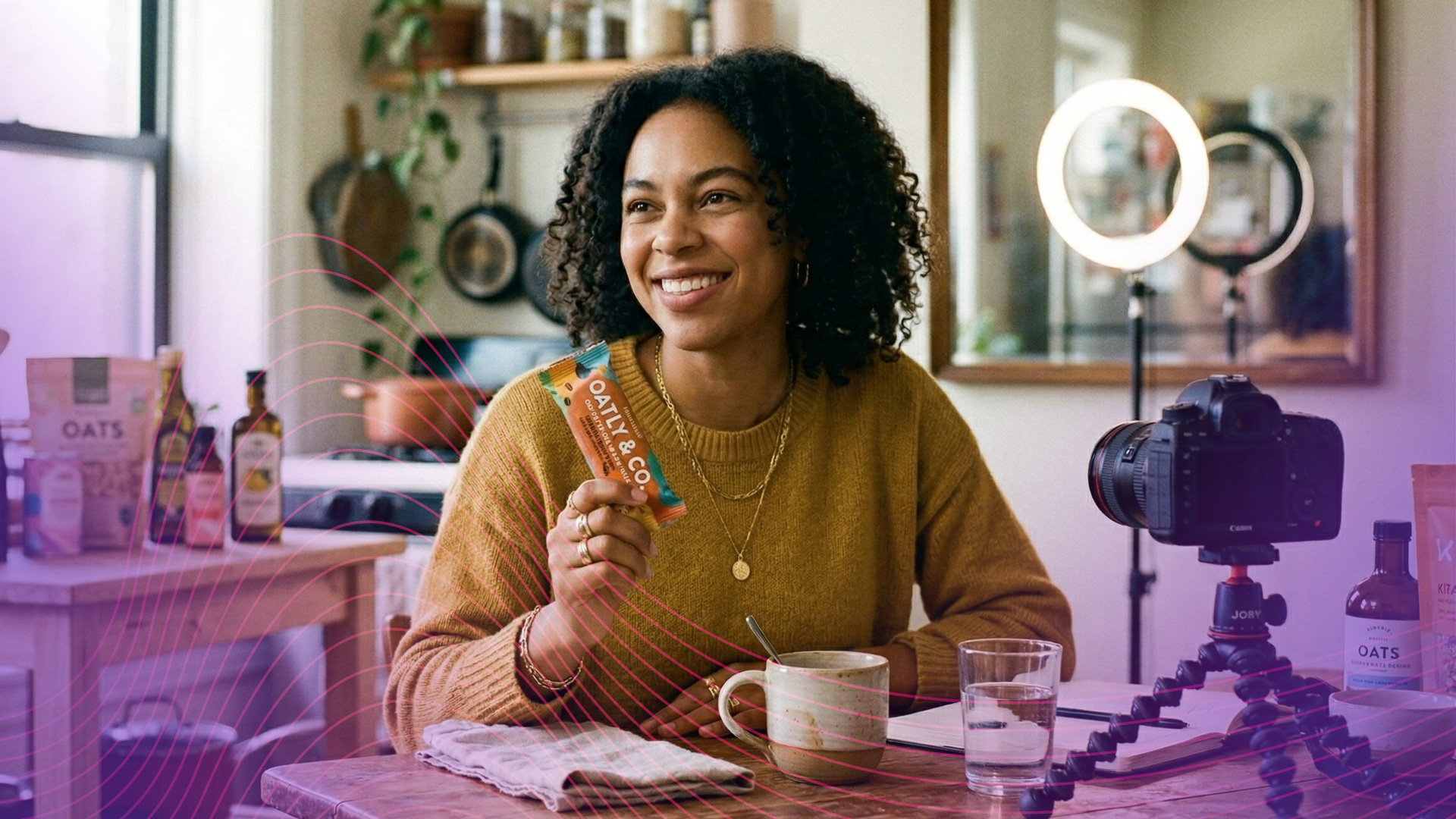
In the rapidly expanding Creator Economy, the blunt reality is that for legacy CPGs, the real risk is waiting. Nearly half of marketers (48%) now consider creators a must-have investment. Half of the industry has already realized that creators are mandatory to maintain trust and fend off private labels. As noted by industry experts, if you are not where the next generation discovers meaning, you don’t exist to them. In Household Goods, that meaning is no longer found in a 30-second TV spot showing a pristine, lab-perfect kitchen. It is found in the real-life proof of a creator’s messy, lived-in reality.
Trust-First
In a category driven by efficacy (does this stain actually come out?), trust is the only currency that prevents a consumer from switching to a cheaper private-label alternative.
“Consumers are no longer just buying a cleaner, they are buying confidence,” notes Danielle DuPreé, VP, Sales – CPG Household Goods at IZEA. “If a brand cannot provide real-life proof of efficacy through voices the consumer already trusts, shoppers will immediately trade down to a private label.”
Today’s consumer journey is no longer a linear path; it is a collapsed funnel. Imagine an infinite loop where discovery, consideration, and purchase happen simultaneously. The search is happening inside the social feed. If a creator isn’t demonstrating your product’s efficacy in a relatable job-to-be-done moment, you are losing the shelf to a brand that is.
The Problem: The Commodity Trap
Household goods brands are struggling with three core threats:
- The Private Label Surge: When a brand fails to differentiate beyond functional utility, the consumer defaults to price.
- Loyalty Erosion: Promotions are beating brand heritage.
- The Skeptical Scientist: Modern shoppers are looking for certifications, green-friendly credentials, and visual proof before they believe a marketing claim. Because affordability is a daily challenge, today’s highly educated consumer defines true value not just by a lower price tag, but by undeniable product effectiveness. They demand to see real-world performance and visual proof before they justify paying a premium.
To win, Household Goods must stop acting like manufacturers and start acting like lifestyle brands. This requires a systematic shift: moving influencer marketing from a tactical add-on to a core marketing pillar.
Here is a three-step mandate for Household Goods CMOs to make this shift:
- Own the Routine, Not Just the Mess
Manufacturers sell a multi-surface cleaner to fix a spill; lifestyle brands sell the Sunday reset. To make this shift, brands must stop focusing solely on the functional problem and start integrating into the emotional routines of their consumers. Partnering with an experienced influencer marketing agency can help position your products as the essential tools for aspirational but attainable rituals, such as the kitchen closing shift or the post-vacation deep clean. When a product becomes part of a trusted creator’s daily habit, it transitions from a commodity to a lifestyle staple.
Treating creators as lifestyle partners yields versatile assets that power your entire marketing engine. In fact, 58% of enterprise brands reuse creator content across their websites, 55% repurpose it for paid social or digital advertising, and 53% use it for organic social channels. This breaks creator content out of the social feed to influence the broader shopper journey.
“A manufacturer tells you what a product does. A lifestyle brand shows you how it makes your home feel,” says Danielle Gianakis, VP, Account Management – CPG Household Goods at IZEA. “When creators build routines around your products, they transform a chore into an act of self-care.”
- Establish an “Always-On” Creator Board
Manufacturers treat influencer marketing like a seasonal media buy, turning it on for Spring Cleaning and shutting it off by summer. Lifestyle brands build constant, community-driven drumbeats. One way to achieve this is for brands to form an always-on “Culture Board”, consisting of micro and nano-creators. Invite these creators behind the curtain to co-develop content, test new fragrances, and provide real-time feedback. This transforms them from paid endorsers into invested brand ambassadors who continuously validate your products to their highly engaged audiences year-round.
The market is already shifting its budget away from massive celebrities and toward these relatable community voices. Today, nearly half (49.9%) of US creator spend is going to nano- and micro-influencers. These creators provide the authentic, real-life proof that consumers demand.
- Prioritize Real-Life Storytelling Over Specs
A manufacturer focuses on the chemical makeup of a dish soap or the ply count of a paper towel. A lifestyle brand focuses on how that product saves the day in a chaotic, lived-in household. Brands must empower creators to lean heavily into authentic, IRL (in-real-life) moments rather than highly polished product shots. Highlighting a messy post-dinner cleanup, the frantic wipe-down after a toddler’s spill, or the realistic organization of a cramped pantry connects the product directly to the storytelling of people actually using it. By showing the product seamlessly solving problems in a relatable environment, brands provide the emotional, real-life proof that static advertising simply cannot replicate.
Ultimately, surviving the affordability paradox demands more than just a functional product sitting on a shelf. It requires an authentic connection built on real-life proof. By embracing creators as long-term partners who validate efficacy and inspire daily routines, Household Goods brands can successfully escape the commodity trap. The choice for marketing leaders is clear: remain a mere manufacturer fighting a losing battle on price, or evolve into a trusted lifestyle brand that modern shoppers refuse to live without.
Navigating the creator economy doesn’t have to be a solo effort. As a full-service agency, IZEA partners with brands to build tailored, impactful solutions. We’d love to hear about your goals—let’s chat.
Source: eMarketer Roundup March 2026

John Francis is the Vice President of Sales & Marketing Operations at IZEA Worldwide (NASDAQ: IZEA), a full-service creator economy agency. Powered by its proprietary ZED technology, IZEA provides comprehensive influencer marketing solutions for brands. Since 2006, the agency has facilitated nearly 4 million brand-creator collaborations and partnered with over 1,500 brands. John leads the go-to-market strategy for IZEA’s enterprise services, working directly with marketing leaders at Fortune 500 companies across the CPG, media and entertainment, mobility, and consumer electronics sectors.
- Build scalable, data-driven creator programs
- Connect with high-impact creators who drive real growth
- Produce content designed to stand out, scale, and convert
- Amplify creator content to turn influence into measurable impact
- Drive seamless purchase paths with social commerce
- Ignite real-world moments through unforgettable experiences